


Introduction: Understanding FQHC Billing in 2025
Federally Qualified Health Centers (FQHCs) in Colorado Springs play a vital role in delivering affordable healthcare to underserved communities. But behind every patient encounter lies a complex billing process from 330 Grant management to sliding fee scale applications and U-code reporting.
In 2025, compliance and efficiency are more critical than ever. Whether you’re a healthcare administrator, billing manager, or FQHC CFO, mastering the nuances of FQHC billing ensures your facility gets the reimbursement it deserves while maintaining compliance with HRSA and CMS regulations.
What Makes FQHC Billing in Colorado Springs Unique?
Unlike private practices, FQHCs operate under special reimbursement models and funding structures. The billing challenges are amplified by state level Medicaid policies, U-code utilization, and sliding fee programs.
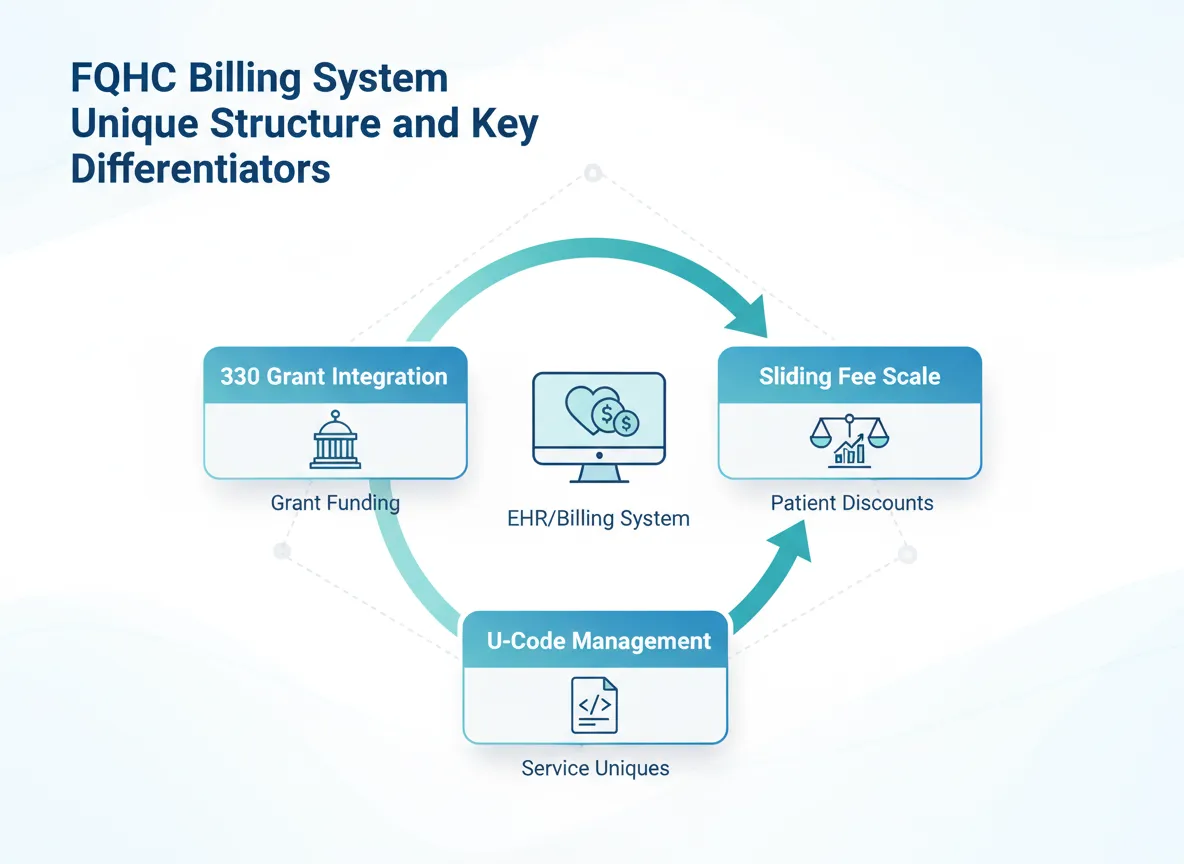
Key Differentiators:
330 Grant Integration: Ensures HRSA compliance and supports operational sustainability.
Sliding Fee Scale: Mandated to make healthcare affordable for low income populations.
U-Code Management: Defines encounters for accurate reimbursement from Medicaid and Medicare.
Each component must sync seamlessly with EHR and billing systems to prevent denials and maintain cash flow.
Deep Dive The 330 Grant & Its Billing Impact
What is a 330 Grant?
The Section 330 Grant is the backbone of every FQHC’s funding. It provides federal support to offer care regardless of patients’ ability to pay.
How It Affects Billing
It requires strict reporting and accountability for patient encounters.
Billing data must align with Uniform Data System (UDS) submissions.
Grants and billing intersect through cost reporting, not direct claim submission.
Pro Tip: A mismatch between 330 Grant reports and Medicaid billing data can flag compliance audits. Maintaining a clean EHR to billing workflow is essential.
Sliding Fee Scale Making Care Accessible Without Revenue Loss
Every FQHC must implement a sliding fee discount program to adjust patient charges based on income and household size.
Best Practices in 2025
Use automated eligibility verification tools to reduce administrative burden.
Update sliding fee schedules annually according to Federal Poverty Guidelines.
Document all patient interactions to protect against HRSA audit risks.
Case Example
An FQHC in Colorado Springs improved collections by 18% after integrating automated sliding fee calculations with their billing software reducing manual entry errors and improving patient transparency.
Mastering U-Codes in FQHC Billing
U-codes are specialized billing codes unique to FQHCs. They represent encounter types instead of specific procedures.
Most Common U-Codes
T1015: Clinic visit, all inclusive.
U0001 to U9999: Vary by state and payer for encounter tracking.
Why U-Code Accuracy Matters
Incorrect U-codes lead to claim denials and underpayment.
Proper mapping ensures accurate PPS (Prospective Payment System) reimbursement.
Supports compliance with Colorado Medicaid and UDS reporting.
Quick Tip: Regular U-code audits can identify billing gaps and improve revenue by 10 to 15%.
FQHC Billing Workflow in 2025 A Streamlined Approach
Modern Billing Strategies
Centralized Revenue Cycle Management (RCM)
Consolidate multiple clinic data sources.
Real-Time Claim Tracking
Identify denials instantly and reprocess faster.
AI-Powered Coding Checks
Reduce human error and ensure UDS consistency.
Patient Engagement Portals
Automate statements and fee collection.
Local Insight: Colorado Springs FQHCs are increasingly using cloud based billing platforms integrated with telehealth systems to handle hybrid patient care models effectively.
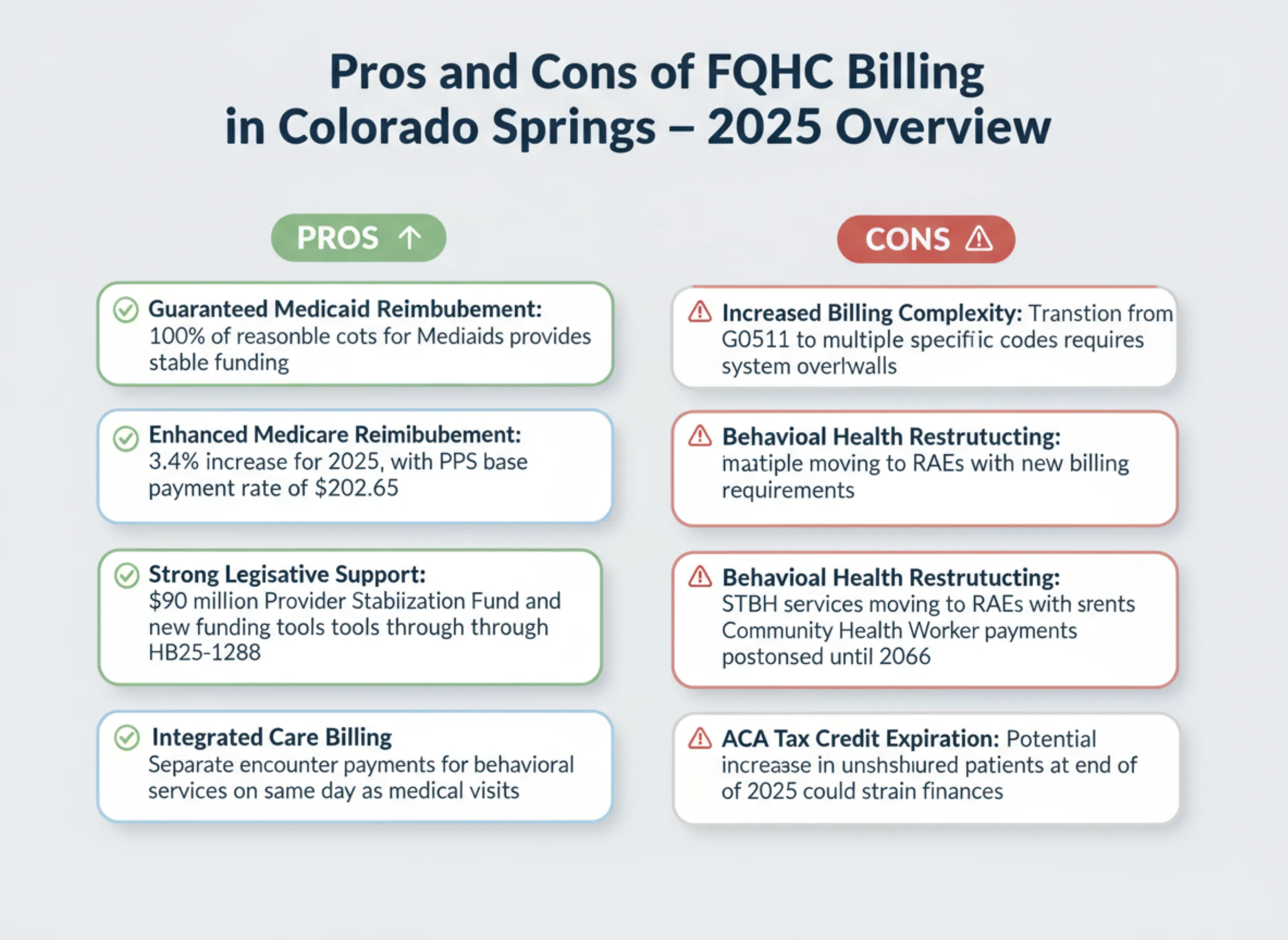
Case Study: How a Colorado Springs FQHC Boosted Revenue by 22%
A mid sized FQHC faced recurring Medicaid denials due to incorrect U-code mapping. After conducting a 90 day audit and retraining their billing staff on T1015 and state specific U-codes, the center recovered $180,000 in underpaid claims.
The result? Increased revenue, improved compliance, and faster claim turnaround.
CureBill Your FQHC Billing Partner
CureBill specializes in FQHC billing, 330 Grant optimization, and sliding fee scale management. Their expert team ensures your billing systems meet HRSA standards while maximizing reimbursement efficiency.
1)Expertise: Decade-long experience with FQHCs nationwide.
2)Technology: Advanced analytics and automated claim scrubbing.
3)Transparency: Real-time reporting and performance dashboards.
Partner with CureBill today and empower your FQHC with smarter billing and stronger financial health.
FQHC billing in Colorado Springs refers to the process of managing claims, grants, and reimbursement for Federally Qualified Health Centers (FQHCs). It includes handling Medicaid and Medicare claims, managing 330 Grant reporting, and applying sliding fee discount programs to ensure compliance with HRSA and state regulations. Accurate billing helps FQHCs maintain funding and provide affordable healthcare to the community.
The 330 Grant provides core funding that allows FQHCs to serve patients regardless of their ability to pay. In billing, it ensures that financial data, patient encounters, and Uniform Data System (UDS) reports align with federal compliance requirements. Proper integration of 330 Grant data into billing workflows helps Colorado Springs health centers sustain operations and secure continued HRSA funding.
U-codes are specialized encounter-based billing codes used by FQHCs to report visits for Medicaid and Medicare reimbursement. They replace traditional CPT codes in many cases and determine how much a clinic gets paid per patient encounter. Accurate U-code mapping ensures compliance, prevents claim denials, and supports the Prospective Payment System (PPS) model used in FQHC billing.
A sliding fee scale adjusts patient charges based on income and family size, ensuring healthcare remains affordable for low-income or uninsured patients. Each FQHC in Colorado Springs must follow federal poverty guidelines to set these discounts. When implemented properly, a sliding fee program improves patient access without compromising clinic revenue or compliance.
Some of the main challenges include:
Frequent U-code updates and policy changes.
Managing Medicaid and Medicare denials due to coding errors.
Maintaining compliance with HRSA 330 Grant reporting.
Balancing affordability through sliding fee scales while sustaining financial stability.
Partnering with a specialized FQHC billing service like CureBill can help overcome these issues with automation and expertise.
CureBill provides end-to-end FQHC billing solutions tailored for clinics in Colorado Springs. Their team specializes in U-code management, 330 Grant integration, and sliding fee scale automation, helping health centers increase reimbursements and reduce claim denials. With advanced analytics and HRSA-compliant reporting, CureBill helps FQHCs stay financially strong while focusing on patient care.