
Why Imaging Billing in Denver Faces Higher Denials (2025 Local Reality)
Running an imaging or radiology center in Denver has become significantly more challenging over the past 2 to 3 years. Payers in Colorado especially UnitedHealthcare, Anthem, and Medicaid now require deeper documentation, stricter prior authorization, and tighter proof of medical necessity than before. That is why even fully valid MRI or CT claims are getting denied on first submission.
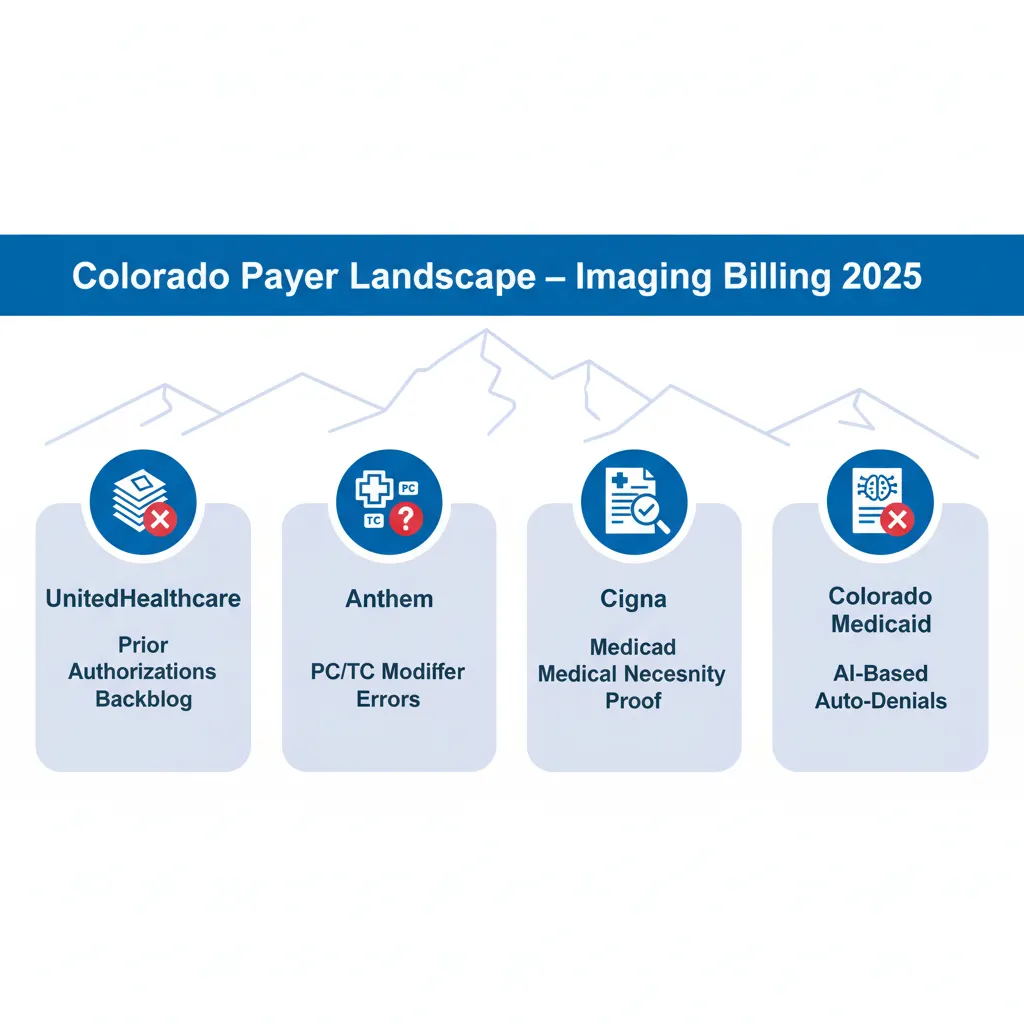
Major Colorado payers now use “clinical validation AI” to filter claims before a biller even touches it. If your billing workflow isn’t optimized for technical/professional component coding (TC/26/Global) revenue leaks are inevitable.
This is why Denver based billing knowledge (not generic RCM) now matters more than ever.
Most Common Reasons Imaging Centers in Denver Lose Revenue
Below are the five denial “hot spots” that imaging centers in Colorado report the most and each one is tied to payer policy shifts after 2023.
Eligibility & Authorization Mismatch
A clean MRI scan doesn’t equal a clean claim.
If the referring provider missed authorization or didn’t submit clinical notes the imaging center bears the denial.
Missing or Incorrect TC/26 Modifiers
This is the #1 underpayment cause for radiology in Denver.
TC → technical component only
26 → professional interpretation
No modifier → treated as global billing more likely to be denied
Medicaid Documentation Standards
Colorado Medicaid requires proof of necessity, not just CPT correctness. If medical notes don’t support usage → denied as non covered.
Slow Documentation Turnaround
If the chart isn’t closed or signed fast enough — billing slows → cash flow gap.
Commercial Payer Underpayments
Even when approved, payers downcode or short pay MRI/CT more than any other modality in imaging.
How to Reduce Denials and Get Paid Faster (Action Plan)
Step 1 Authorization Workflow Optimization
Automate prior auth + clinical documentation retrieval from referring providers.
Step 2 Colorado Payer-Specific Rules
UHC, Anthem, and Medicaid each require different justification documentation.
Step 3 Real Time Eligibility Scrubbing
Catch coverage rejections before claim submission.
Step 4 Coder Review for TC/26
Billing mistakes are prevented before claim submission, not after.
Step 5 Faster AR Follow Up
First 7 days after denial is the best window to reverse a decision.
How CureBill Helps Imaging Centers in Denver
CureBill is built specifically for Colorado providers and handles.
Imaging specific denial management
Authorization + pre-cert support
TC/PC/Global split optimization
Medicaid documentation packaging
Underpayment tracking
100% HIPAA/HITECH compliance
Most claim denials for Denver-based imaging centers come from missing prior authorizations, incorrect TC/26 modifier usage, or payer-specific coding errors in MRI and CT billing. When these steps are not documented correctly, payers like Medicaid, Anthem, or UnitedHealthcare delay or deny payment.
The best way to reduce MRI and CT denials is to verify insurance benefits before scheduling, follow payer-specific authorization rules, and make sure the professional (26) vs technical (TC) modifier is used correctly. This one change alone prevents a large percentage of write-offs.
Most imaging centers in Colorado see their claim turnaround time drop from 45–60 days to about 20–30 days once billing is outsourced to a specialized radiology billing team. Clean claims and proper pre-auths dramatically speed up payments.
Yes. Colorado Medicaid requires proof of medical necessity, clinical justification, and in many cases a referring physician’s notes before approving advanced imaging like CT, MRI, and PET scans. Missing documentation is a common reason for Medicaid delays.
For most diagnostic centers, TC/26 split billing is the most accurate billing model because it separates the professional reading from the technical imaging service. This reduces underpayments and matches the way payers reimburse radiology in Colorado.
Yes. Reputable billing providers — including CureBill — use HIPAA and HITECH-compliant systems, secure EHR handling, and audit-ready documentation to keep both patient data and claims secure.
Absolutely. CureBill supports independent diagnostic centers, outpatient imaging facilities, and specialty clinics across Denver, helping them reduce denials, speed up payments, and handle payer compliance without hiring in-house billing staff.