
Introduction Why Billing Software Matters for Small Practices in 2025
Running a small medical practice is rewarding but managing billing, claims, and reimbursements can quickly become overwhelming. With rising insurance complexities and compliance requirements, small clinics in 2025 are increasingly turning to medical billing software to simplify workflows and reduce errors.
If you’re a small clinic owner, therapist, or independent physician, this guide compares the top 7 medical billing software tools in 2025, their pros and cons, pricing, and how to choose the best fit for your practice.
What Is Medical Billing Software?
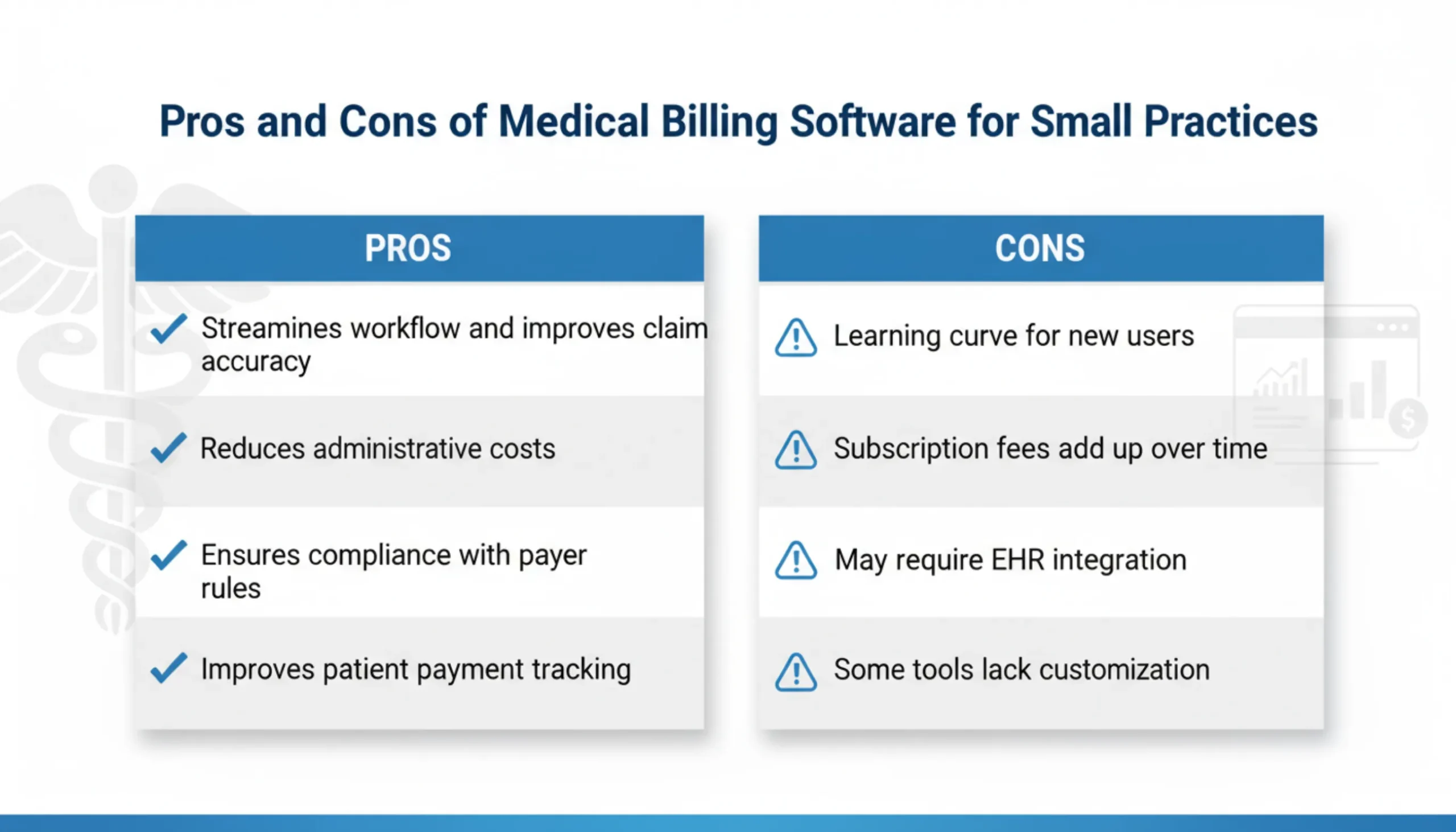
Medical billing software automates claim submission, payment posting, insurance verification, and revenue tracking. For small practices, it helps eliminate manual data entry, reduce denials, and ensure accurate reimbursement without needing a large billing staff.
Key Benefits of Medical Billing Software for Small Practices
Faster claim submissions and payments
Fewer billing errors and denials
Built in compliance (HIPAA, ICD-10, CPT updates)
Centralized patient and insurance data
Real time reporting and analytics
Cost savings vs hiring full time billing staff
Case Study How Small Practices Improve ROI with Billing Automation
In 2025, a small therapy clinic in Colorado switched from manual billing to CureBill’s hybrid model combining human expertise with automated billing software. Within six months, they reduced denials by 43%, improved claim turnaround from 30 to 14 days, and saved nearly $12,000 annually in overhead costs.
Key Takeaway:
Smart billing tools don’t just automate tasks they free up time, increase collections, and strengthen cash flow stability for small practices.
How to Choose the Right Medical Billing Software for Your Clinic
When selecting the right software for your small practice, consider these factors.
Ease of Use
Look for intuitive dashboards and role based access. Your billing team should easily manage claims, track payments, and handle denials.
Integration
Ensure the billing platform integrates seamlessly with your EHR, practice management, and telehealth tools.
Custom Pricing
Flat monthly pricing or percentage based models? Choose a plan that aligns with your claim volume and practice size.
Support and Compliance
Choose a HIPAA compliant platform with responsive customer support and regular system updates.
Why CureBill Stands Out for Small Practices
CureBill bridges the gap between billing software and full service RCM management. It offers a hybrid model combining automation with real billing experts to handle complex claims and payer issues.
CureBill Advantages:
100% HIPAA-compliant billing solutions
AI powered claim scrubbing and tracking
Transparent flat fee or performance based pricing
Dedicated US based support
Tailored solutions for small and multi specialty clinics
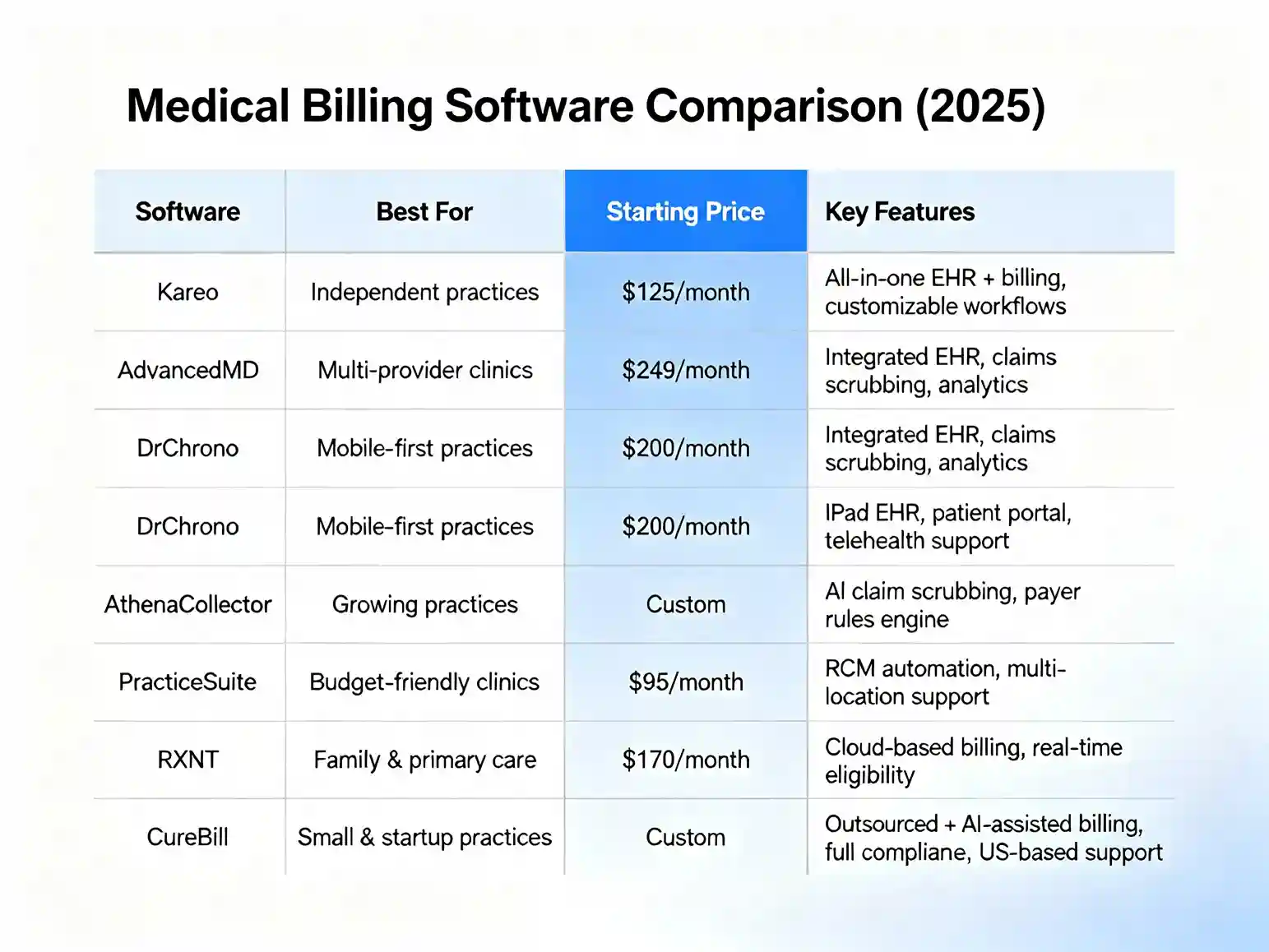
The best medical billing software in 2025 for small practices depends on your specific workflow and budget. Top-rated options like Kareo, AdvancedMD, and CureBill stand out for their automation, HIPAA compliance, and scalability making them ideal for small to mid-sized clinics aiming to simplify billing and increase revenue.
In 2025, medical billing software pricing typically ranges from $95 to $250 per provider per month. Platforms like CureBill offer flexible, custom pricing with full revenue cycle management (RCM) support, helping practices save money and improve collections without hiring extra staff.
Yes, small and startup practices can easily manage billing using automated medical billing software. Cloud-based tools such as PracticeSuite and CureBill handle claims submission, tracking, and compliance, eliminating the need for in-house billers while maintaining accuracy and faster reimbursements.
Absolutely. Modern cloud-based medical billing systems are built with HIPAA-compliant encryption, two-factor authentication, and secure data centers to protect patient information. Vendors like CureBill and RXNT ensure full data protection while allowing easy remote access for billing teams.
CureBill is more than just billing software it’s a complete RCM and billing automation solution for small medical practices. With AI-assisted claim management, transparent pricing, and expert US-based support, CureBill helps clinics reduce denials, boost revenue, and stay fully compliant in 2025 and beyond.